
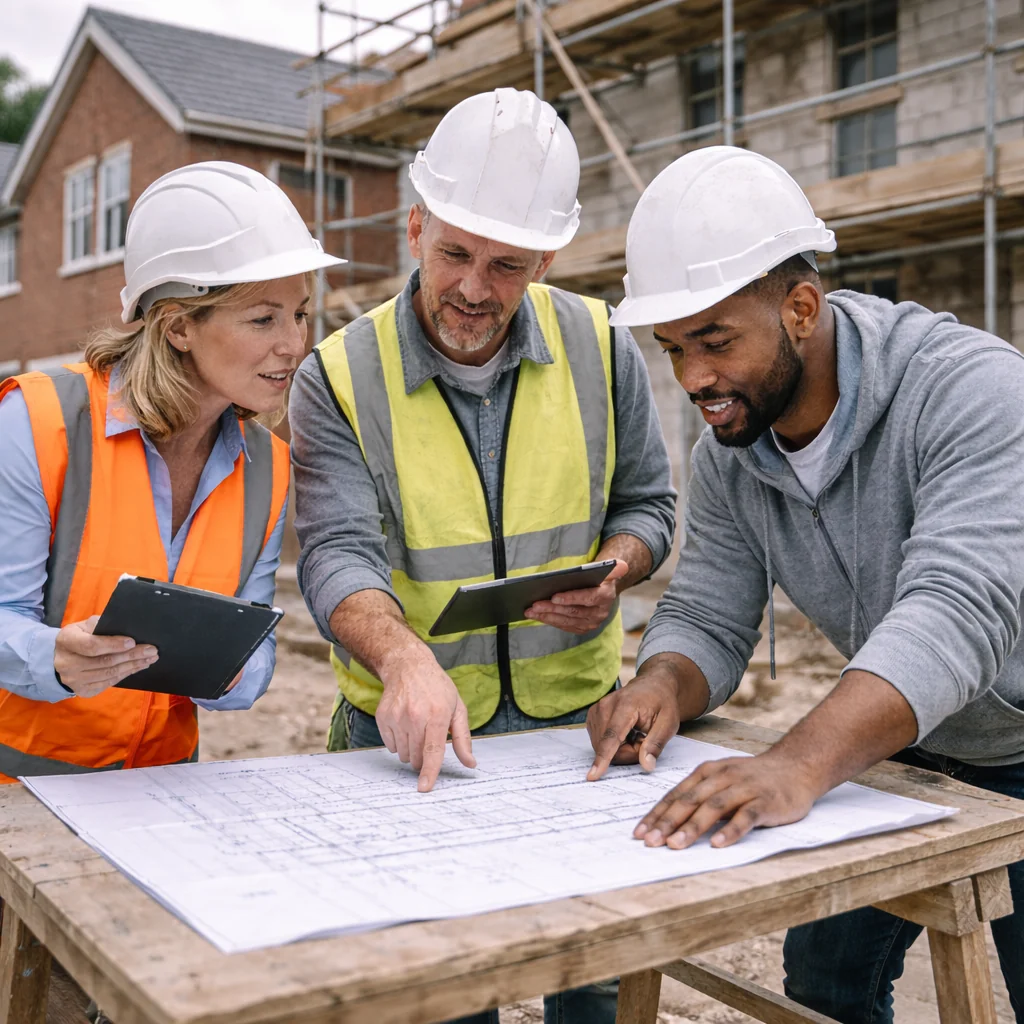
Collaboration has long been seen as a hallmark of well-run construction and housing projects. Teams that communicate effectively, share information and support one another through challenges are generally viewed as stronger and more resilient. For many years, that understanding has largely been based on trust, relationships and experience.
As the sector shifts from a focus on volume to a focus on value, that picture is beginning to change. The question is no longer simply whether organisations collaborate well. Increasingly, the question is whether they can demonstrate control, clarity and shared responsibility across the full delivery chain. That shift is subtle, but it represents a meaningful change in what “good” looks like in 2026.
Why proof now matters more than intention
In more confident market conditions, collaboration has often worked through informal channels. Conversations, personal familiarity and goodwill have filled the gaps where documentation or accountability frameworks were less consistent. In a more constrained environment, those informal structures are less persuasive. Expectations are tightening, and scrutiny has increased.
What now carries weight is the ability to show how work is coordinated when something happens. Organisations are being assessed on whether handoffs are visible, responsibilities are understood, decisions can be traced, and actions can be evidenced rather than recalled from memory. This shift is not about distributing blame. It is about demonstrating maturity, assurance and professional discipline.
From “we collaborate” to “we can evidence how we work”
There is a growing distinction between collaboration as a cultural value and collaboration as an operational capability. Saying that teams work well together is no longer the end of the story. Increasingly, confidence comes from being able to show how that collaboration functions in practice, particularly when an issue emerges or circumstances change.
This is the difference between describing collaboration and being able to evidence it. When decision trails are visible, when actions can be explained and when ownership is clear, trust is strengthened not only between delivery partners but also with clients, residents and auditors. Collaboration becomes something that can be relied upon, not just something that is spoken about.
Where expectations are tightening
The pressures driving this shift are multi-layered. Greater scrutiny around handover outcomes, growing attention on risk and liability, and tighter operating margins all contribute to a climate where ambiguity is harder to absorb. Rework, duplication and miscommunication now carry a higher cost, both financially and reputationally. In that context, clarity and visibility become performance issues rather than administrative ones.
As these expectations continue to rise, the organisations that treat coordination and evidence as core capabilities are beginning to set the benchmark for others. What was once seen as a “nice to have” is quietly becoming part of the definition of competence.
What evidencable collaboration looks like in practice
In reality, this shift does not translate into heavy processes or additional noise. It often shows up in small but meaningful changes: clearer understanding of who is responsible for what, fewer conversations that rely on recollection, stronger links between what happens on site and what happens after residents move in, and a shared sense of accountability rather than fragmented ownership. The aim is not complexity. It is the reduction of uncertainty.
Why this matters for the year ahead
2026 is unlikely to be defined solely by pace, volume or output. It is more likely to be shaped by the organisations that can deliver with confidence, minimise friction and protect long-term outcomes across the life of a project. In that environment, the ability to evidence collaboration becomes a central part of how resilience is built.
Proof creates confidence. It supports relationships, reduces risk and strengthens trust across clients, contractors, supply chain partners and residents. Those who invest in this shift early are increasingly the ones who will define what “good” looks like, while others will find themselves measured against that emerging standard.
Join the conversation
How is your organisation responding to this move from collaboration as intention to collaboration as proof? We would be interested to hear how this is showing up in your projects and delivery models.